I have been thinking *a lot* about heritage artefacts at mainline railway stations over the last few years. They are so important in telling the story of the railway station at which they are located (and quite often the history of the wider railway industry), yet frequently go unrecognised and unprotected. They are often very beautiful things in their own right, as well.
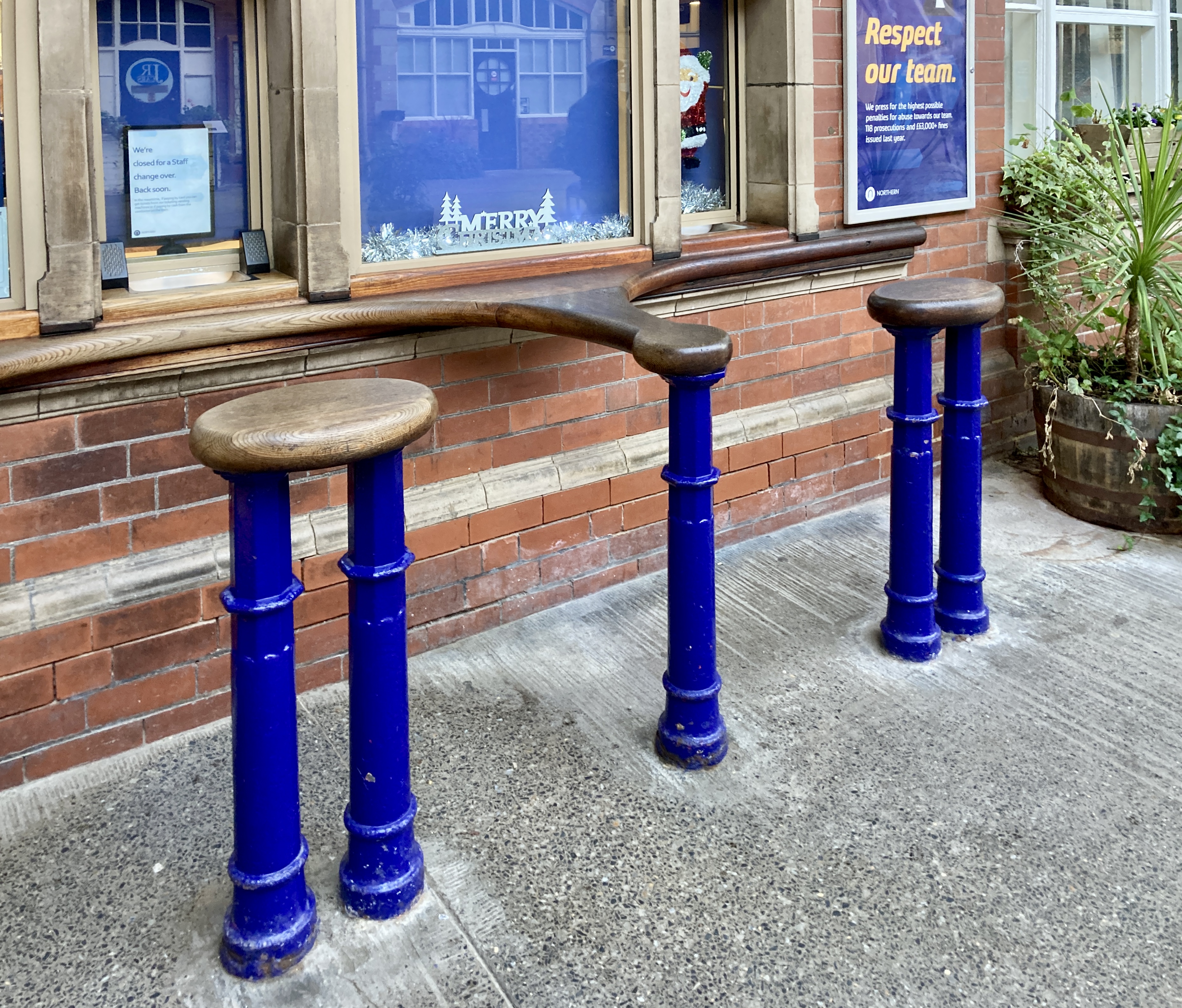
So I have had an idea.
It is a truth universally acknowledged that a middle aged man in possession of a transport-related obsession must be in want of a website. Or in my case, a second website. But before I tell you about my new one, here’s a recap on the issue of heritage artefacts at mainline railway stations for those whose ears I have not already chewed on the subject (you know who you are, and sorry about that).
If you’re already familiar with the situation, click here to skip the background and read about my idea for tackling the lack of information about these artefacts.
Heritage Artefacts at Stations – What’s the Problem?
The last time I got on this soapbox here was to lament the not-quite-accidental but not-quite-deliberate loss of the beautiful 1930s mosaic floor in the toilets at Havant station. Unlike Transport for London, which keeps audits/registers of the heritage artefacts at London Underground, Overground and Elizabeth line stations, the mainline railway industry has no such equivalent. And because of that, heritage features at mainline stations (like those mosaic floors at Havant) have an unfortunate tendency to get accidentally replaced or removed.
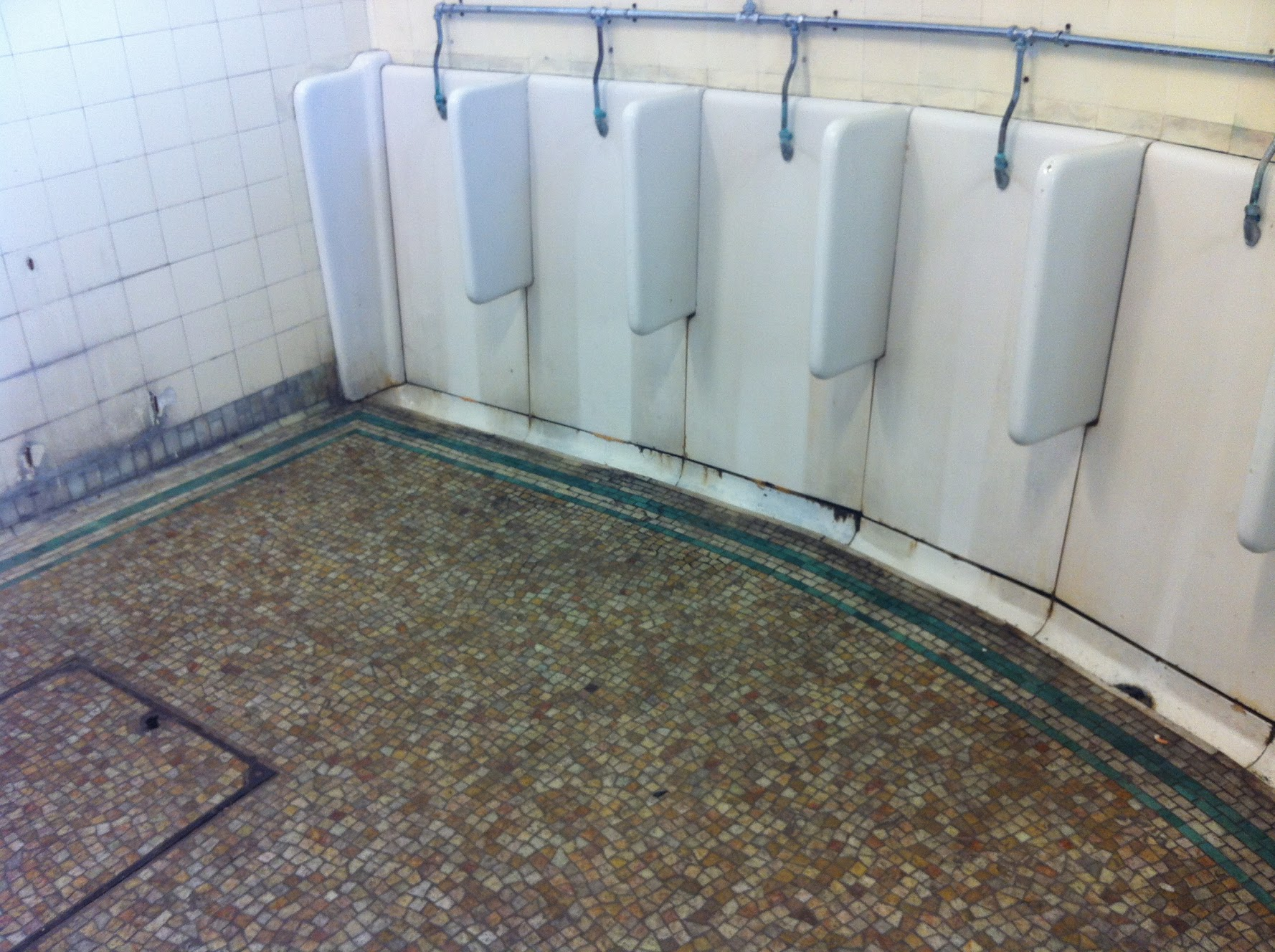
[An aside. Station operator South Western Railway, which replaced the Havant toilets 1930s fixtures and fittings with modern, has since undertaken a brilliant scheme to retain, repair and restore the even older 1880s toilets at London Road Guildford, with the support of the Railway Heritage Trust. And, wonder of wonders, the comments below the piece on the local news website are actually appreciative.]
I know that there are many quite senior people in the mainline railway industry who appreciate the desirability of some kind of register of heritage artefacts on the network, so this isn’t a problem of nobody caring. But to be honest finding resources for such a project is always going to be a challenge when the public is (not entirely unreasonably) just wanting the industry to make trains more punctual/reliable/frequent/fast with more seats/better facilities/cheaper fares. With the shake up that is Great British Railways also underway I guess a heritage artefacts register isn’t exactly a top priority.
If I understand correctly, there actually are plans progressing for a pilot scheme identifying and recording heritage artefacts on one part of the mainline railway network and I hope that comes good. In the meantime there are a lot of historic objects at railway stations on the rest of the network that don’t really have any particular protection and don’t look likely to in the near future.
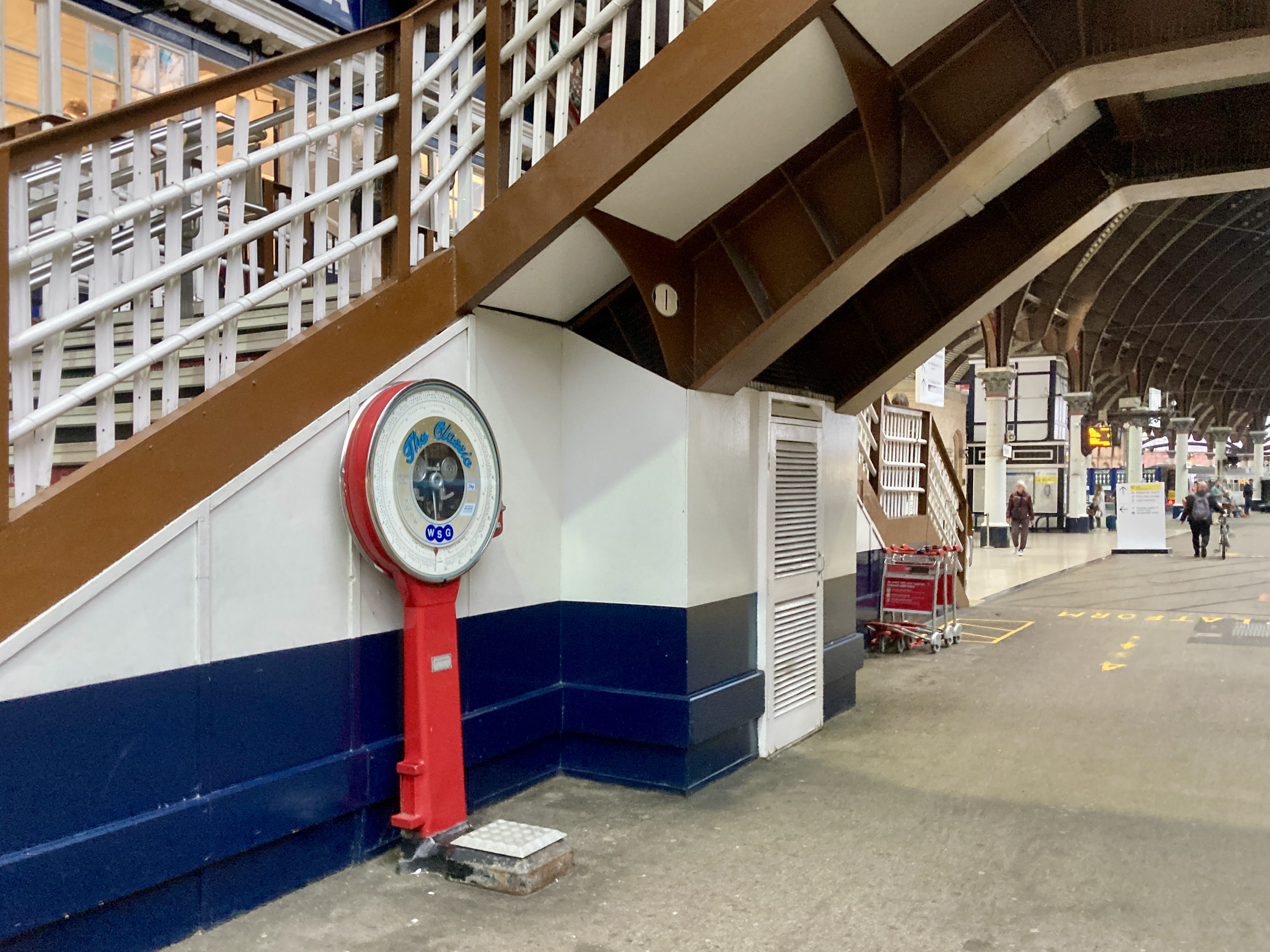
Listing of stations (by Historic England, Cadw or Historic Environment Scotland) affords some statutory protection to artefacts, especially the fixtures and fittings which are permanently attached to buildings. Despite that, it is surprisingly possible for contractors not to realise they are working at a listed station and accidentally remove/replace heritage artefacts in the process of maintenance, repair and modernisation. And where objects are not attached to the actual station – like (for instance) the weighing machine on platform 3 at York (of which more later) – no one seems sure if listing even covers them. Clearly, listing doesn’t and shouldn’t automatically protect chairs recently brought in to a station cafe, but at what point (if at all) are moveable objects that have been at the station for decades covered by the listing?
The problem is acute at non-listed railway stations, where the only other protection mechanism for heritage artefacts is the Railway Heritage Designation Advisory Board, and the designation list it has created. Unsurprisingly that list concentrates on nationally significant items and records and has a much wider scope than just heritage artefacts at stations. It’s not really set up to capture the multitude of objects which are interesting and important to the history of any particular station, but are often not of national importance.
The result is that there is an awful lot of wonderful ‘stuff’ at railway stations for which there is no protection, no records and no single central register. The downstream impact of this missing data is that the ‘stuff’ sometimes disappears or is damaged because people don’t understand its rarity value or importance to railway and/or station history. And who can blame them if they don’t have a data source to check what the important artefacts at a station before commencing any works there?

There are particular elements of the current structure of the railway industry which make the retention of heritage artefacts at stations challenging. Network Rail has the long-term ownership of stations, including their fixtures and fittings. But it has no day-to-day responsibility for the maintenance of those fixtures and fittings at the vast majority of stations. Train operators manage most of their stations, but don’t own them or have a long-term interest in them. Indeed, from a train operator’s point-of-view one can completely understand why removing antique (expensive to maintain) fittings in favour of modern, mass produced fittings (cheap to maintain) makes financial sense. The creation of GBR should see the operation and ownership of stations vested once more in a single body, which one might expect to help with this. Well, maybe, but as the actual operational arrangements for GBR remain maddeningly opaque at the present moment, who knows?
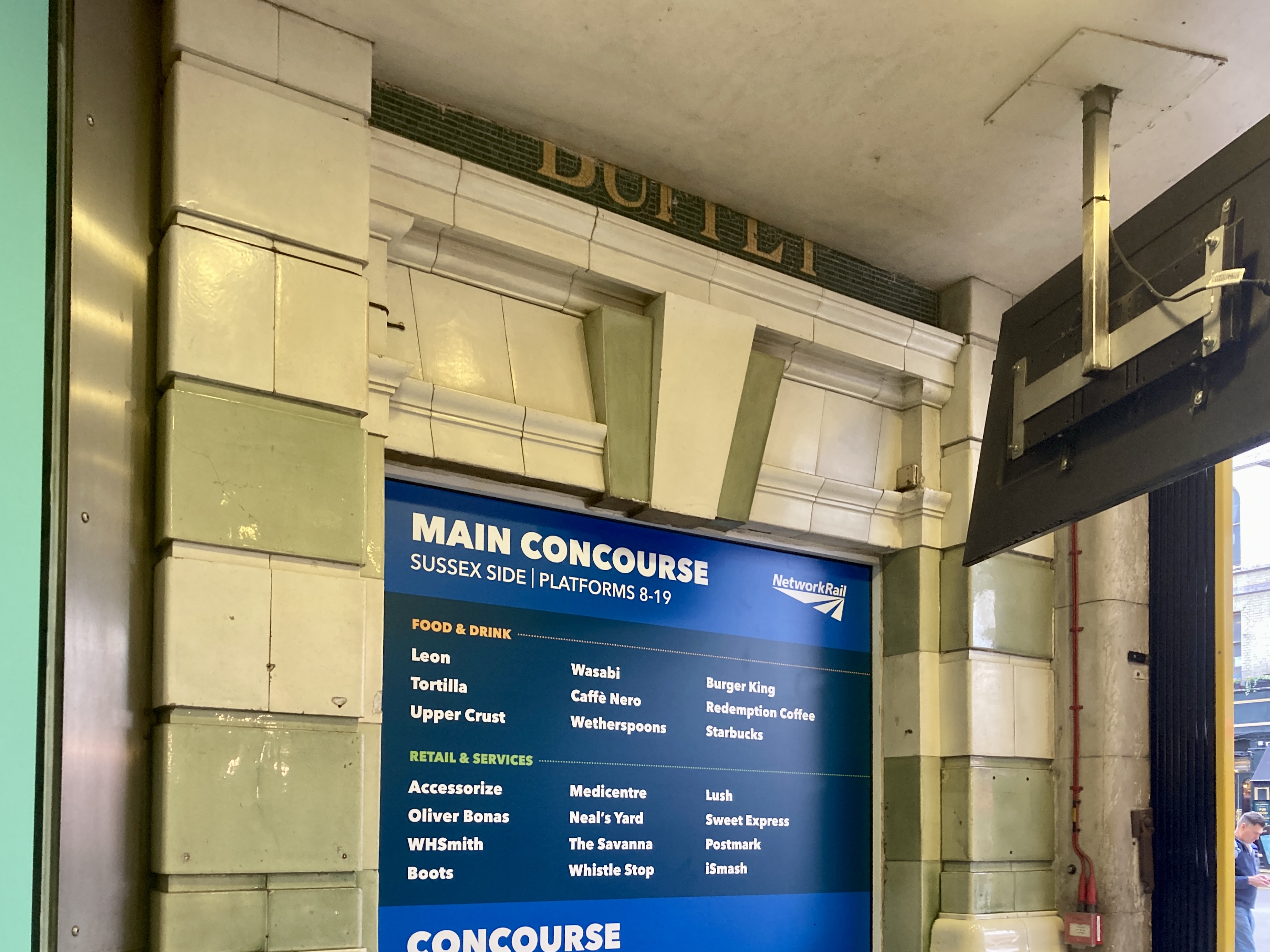
I’ve been noting examples of heritage artefacts at stations for quite a few years now, and have built up quite a large photographic collection of them. Occasionally I do talks on the subject and people seem interested and genuinely surprised at the variety of these objects and the stories they tell. Audiences are also gratifyingly shocked about the treatment of some heritage artefacts. My favourite go-to example is the terrible inserted ceiling at London Victoria that obscures all but the lower part of some fabulous London, Brighton & South Coast Railway mosaic signage.
So… I began to wonder if maybe I should share my collection online in some way, and perhaps open it up for contributions from other like-minded railway heritage artefacts enjoyers.
A New Way of Celebrating Heritage Artefacts at Mainline Stations
A lot of the detail about heritage artefacts at stations is already publicly available on the internet anyway, but the trouble is it’s all over the place. Historic England’s “Enrich the List” project has encouraged members of the public to upload photos of listed buildings and their heritage features, including railway stations. And believe me, they have been doing. Here’s Hoylake station, as an example.
Wikimedia Commons has a lot too. Want to know what the weighbridge at Redruth station looks like? It’s there on the Commons. Geograph has other examples (like the unusual surviving sliding wooden gate at Knaresborough). And social media is similarly awash with discussions about heritage items at mainline railway stations if you care to start searching. Some official accounts have done great work in raising the profile of heritage artefacts at stations and I thoroughly recommend the Railway Heritage Trust’s various social media channels if you like railway architecture and railway heritage artefacts; do give them a follow.
But it would be so much easier if there was a dedicated site. Perhaps (well, I can hope) such a thing could become something that the rail industry could check in on before works were undertaken at railway stations, to understand the artefacts important to the history of that station, and ensure their protection.
So, I’ve given it a go. One of the two big projects that have kept me away from The Beauty of Transport over the last couple of years is now online, and you’ll find A Mainline Station Heritage Artefacts Collection at www.stationheritageartefacts.org.uk:
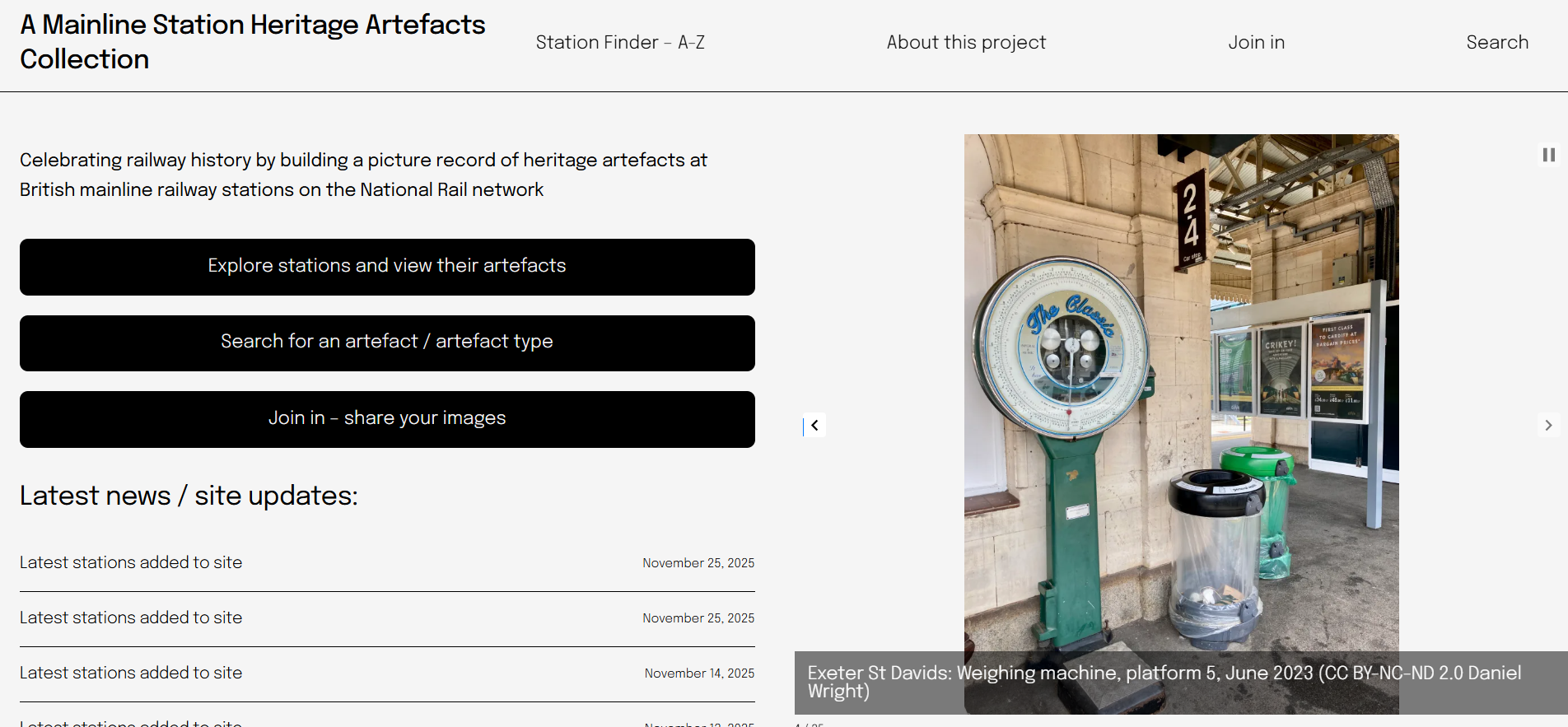
It’s even just squeaked into this Railway 200 year, which I’m quite pleased about.
It’s a simple website (I only have limited resources to throw at it) that aims to do nothing much more than compile photographic records of surviving heritage artefacts at stations. It doesn’t try to trace the history of lost artefacts, nor artefacts which are now in museums/preserved railways/people’s sheds. It is just a picture-led what-to-look-out-for-when-you’re-at-a-station resource. The captions should tell you what the artefact is, where it is at the station and when it was recorded.
It seems to me that the only way that such a resource can hope to capture a national picture of heritage artefacts surviving at stations is to tap into the wisdom of the crowd, by encouraging anyone else interested to send in photos from their own collections and thereby adding to the general gaiety of the nation. You might be an individual interested in railway history, you might be interested in the history of a station as part of your enthusiasm for the local history of your village/town/city. You might be part of a ‘friends’ group at a station, or a Community Rail Partnership that wants to celebrate the heritage features of its stations. Or you might be interested in recording public artworks. Whatever your motivations, A Mainline Station Heritage Artefacts Collection would be delighted to hear from you. Full details of how to submit photos are on the website.
What content are we talking about here?
Station heritage artefacts are the ‘things’ that lend history and identity to stations. They’re not (generally) buildings; station architecture is, I think, something slightly different. But artefacts might well be canopies, clocks or signs attached to buildings, or features of buildings like windows, rainwater goods or decorative ironwork. Interior fittings and fixtures like notable flooring, lights, and wall tiling or panelling would also be in scope. So would permanent artworks like murals or sculpture (but not temporary art displays).

Importantly, artefacts that represent heritage at a station might not be particularly old. Thanet Parkway opened in 2023 and a plaque commemorating its opening and the history of nearby Ebbsfleet & Cliffsend Halt (1908-1933) was installed at the same time. One of the very few tangible remnants of GNER (the East Coast Main Line intercity operator from 1996 to 2007) is a Great Heck accident memorial plaque at Newcastle station featuring the GNER coat of arms. In fifty years’ time, assuming they survive, both will be extremely valuable pieces in the story of early 21st Century railway history.
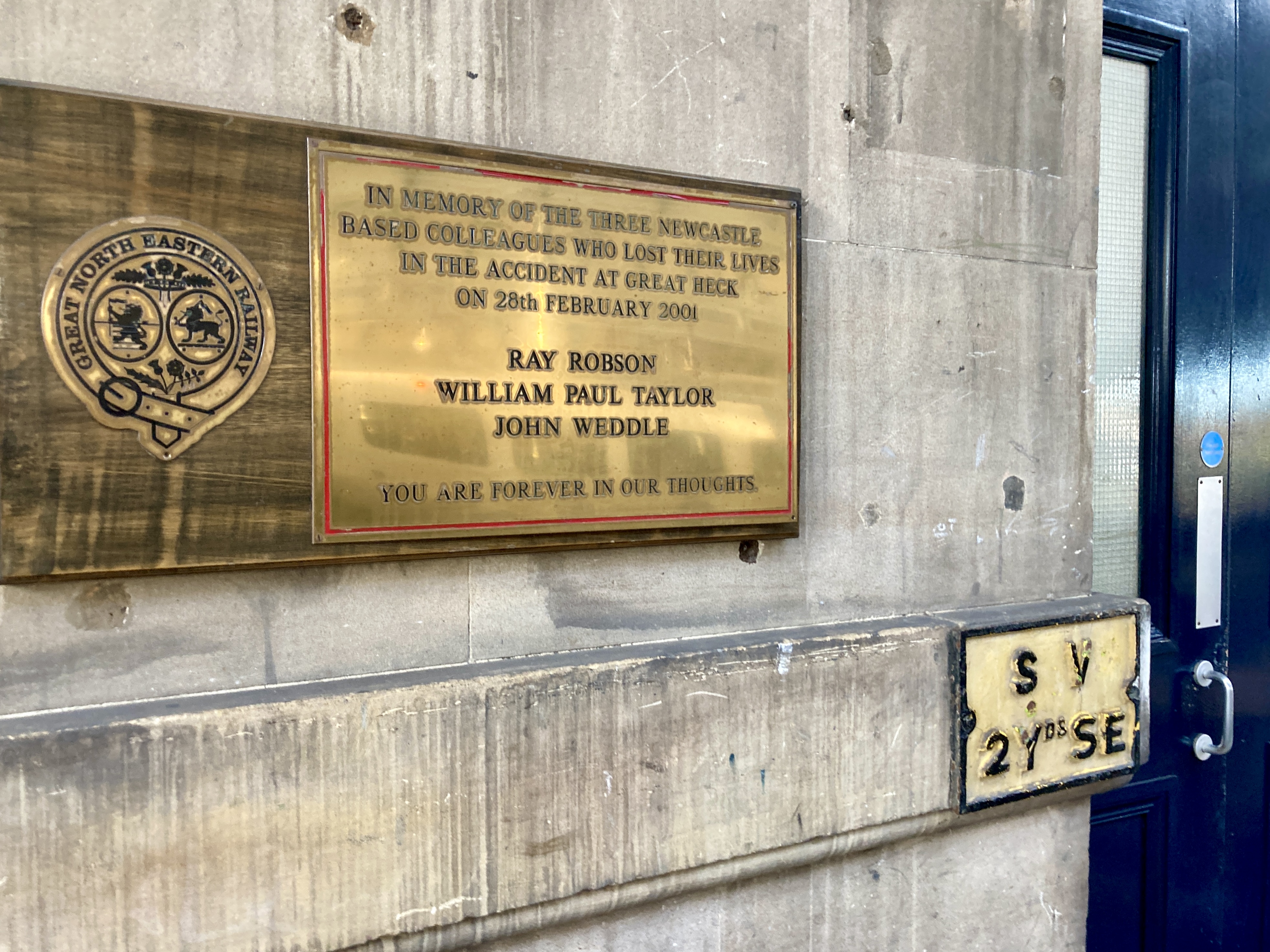
More information about what station heritage artefacts are (and aren’t) is available on A Mainline Station Heritage Artefacts Collection‘s website.
To return to York station’s platform 3 weighing machine mentioned earlier, a very good question was posed on Twitter a couple of years ago by National Railway Museum senior curator Anthony Coulls. No-one could definitively answer it, which was a rather good illustration of the lack of institutional knowledge about heritage artefacts at stations.
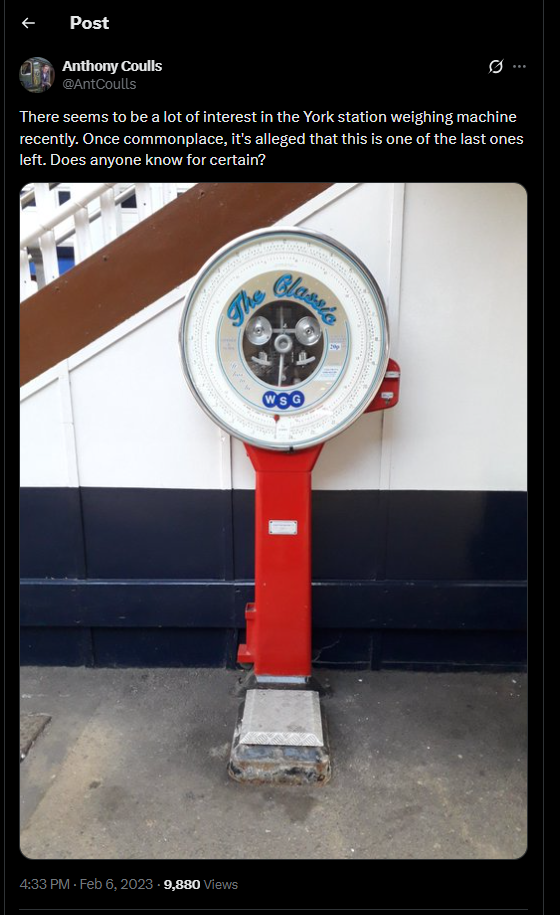
What I can tell you two years later is that although yes, it is one of the last ones left, it is not the only one. There are others of the same WSG “The Classic” design at Exeter St Davids, Cardiff Central, Newport and Crewe, as well as smaller ones by Pooley at Bat & Ball, Great Malvern, Kingussie, Llandrindod and Margate. There are other kinds of weighing machines and weighbridges still to be found at a handful of stations too.
A Mainline Station Heritage Artefacts Collection currently contains images of the weighing machines at Bat & Ball, Exeter St Davids, Great Malvern, Kingussie, Margate, and York. It would be lovely if anyone could submit recent images of the ones at Cardiff, Crewe and Llandrindod – plus any others I don’t yet know about.

The site already contains photos of other gems from the world of station-based heritage artefacts, like Berwick-upon-Tweed’s LNER lineside signage and drinking fountains, Art Deco benches and 1930s toilets at Chalkwell, Network SouthEast platform edging at Brentwood, the first ECML electrification mast at Peterborough, and all sorts of Lancashire & Yorkshire Railway fittings at Hebden Bridge.
It’s only when you start collecting them together that you can see the patterns emerging from artefacts at stations. You begin to notice the standard hoop-pattern spandrels used by the London, Brighton & South Coast Railway on many of its stations, or the identical decorative fencing used by the London, Chatham & Dover Railway at stations like Adisham and Bekesbourne.
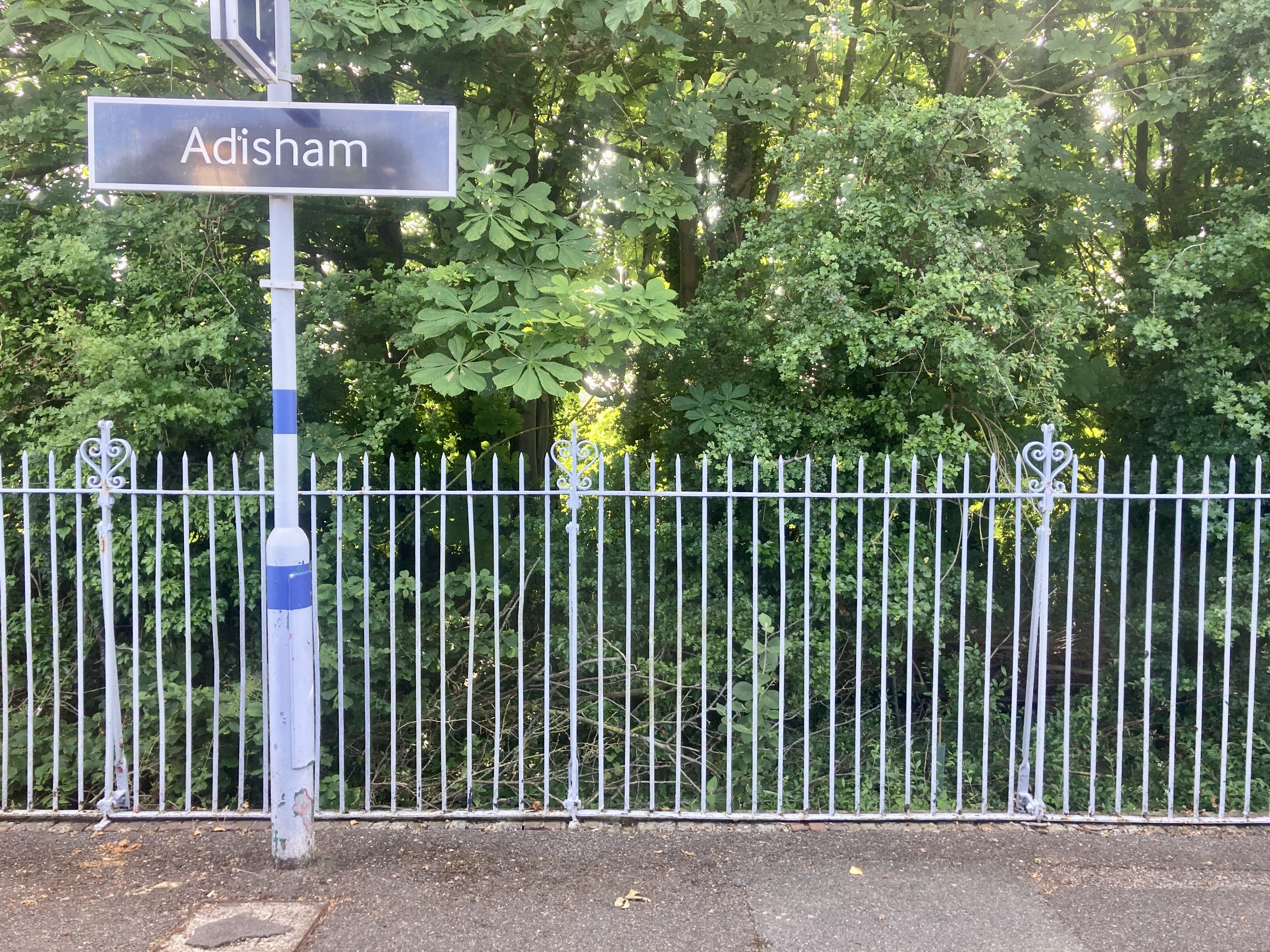
A Mainline Station Heritage Artefacts Collection is searchable by category of artefact (so you can, for instance, look for letter boxes at stations if that’s your thing) and by individual search term from the search page. Head over to the Search page to see the categories of artefacts already identified.
If you would like to join in, please do! Full details of what the site is interested in, how to submit photos (I have quite severe limits on server space so I can’t currently offer direct user uploads) and other things to bear in mind (very specifically the site only accepts photos of artefacts taken in public areas that rail travellers have access to) are on the site. Click on the “Join in” header for the full information.
It’s also useful to know which stations don’t have any identifiable heritage artefacts. For instance I can’t find anything at Ashington, Seaton Delaval and Newsham on the newly re-opened Northumberland Line, not even opening date plaques. Stations currently recorded as having no heritage artefacts are easily searchable by that category – but feel free to prove the Collection wrong if you know better. It’s a live site that can be added to as new information becomes available.
I’m still busy adding my own photo collection to the site, but I do hope you’ll consider submitting your own findings. Even if you just want to do nothing more than browse the amazing variety of heritage artefacts at mainline stations you’re very welcome to do that too.
I hope to see you very soon at A Mainline Station Heritage Artefacts Collection. ■
Further Reading
Did I mention A Mainline Station Heritage Artefacts Collection somewhere in the article? I can’t recall.
 The Beauty of Transport
Good evening Daniel,
Just back from a short trip to Valencia and spent time looking at the main line train station there – Estacion del Norte.
Like the impressive modern (~2000) Cuidad de las Artes y las Ciencias there is beautiful use of bits of ceramic/tesserae on the original interior, like many other places.
Some nice iron work on the outside canopy – detracted somewhat by missing the glass panelling.
We went partly to ride on the metro and trams but few overground routes were running – another time.
Best wishes.
Jerry Ashton
Sounds a very good idea. I am sure the railway community will be there to support you. Paul
This is a fantastic idea and the kind of thing I love to nerd out on. I look out for that sort of thing at any station I find myself at. Sometimes I photograph it, sometimes I don’t, but maybe I have a new reason to photograph them now.
In the past if I did photograph it they’d sometimes end up on Commons, as you mentioned. Would my work there be welcome to be re-uploaded to your new site? (I’ll obviously keep that to things I have reasonable certainty are still there.)
Yes – more than welcome! For various reasons there isn’t a direct upload option on the website at the moment but full instructions of how to submit images are on the “Join in” tab. Thanks!
i was in Peterborough today and meant to go and have a look at the electrification mast plaque, I am old enough to remember it appearing, to remember platform 1 existing, and also to then forget to look for the plaque. However, I was very surprised to see that just north of platform 2, by the headshunts where they used to keep the snowploughs and shunters, is a cut out ’25’ speed stencil, which I’m not sure counts as a station asset but I’ve not noticed one for a very long time, so I had to tell…someone
Thank you for the site/s!
You’re welcome!